

 English
 中文简体
 Español
 عربى
+86-13858925411 / +86-579-87721168
Cookware surfaces have changed considerably with the growth of PTFE and ceramic non-stick technologies. Yet even a carefully engineered cooking surface can suffer from repeated contact with unsuitable utensils. Non-scratch kitchen utensils offer a practical way to reduce this risk, but their performance depends on material, edge design, heat resistance, and the type of cookware being used.
Why Utensil Material Matters
Non-stick coatings are designed to create a smooth food-release surface rather than withstand aggressive mechanical contact. Metal spatulas, whisks, and sharp-edged tools can create abrasions that gradually affect food release. Meyer specifically recommends wooden, silicone, nylon, or plastic utensils with its non-stick cookware and advises against metal tools.
This makes utensil material more than a simple purchasing preference. It becomes part of the cookware system.
- Silicone: Flexible and gentle against coated surfaces, making it suitable for scraping, folding, stirring, and turning.
- Nylon: More rigid than silicone and useful for flipping or lifting food, though heat exposure needs attention.
- Wood: Naturally firm with relatively low surface abrasion, making wooden spoons and spatulas common companions for coated pans.
- Metal: Durable and rigid, but unsuitable for many non-stick surfaces because edges can scratch or chip the coating.
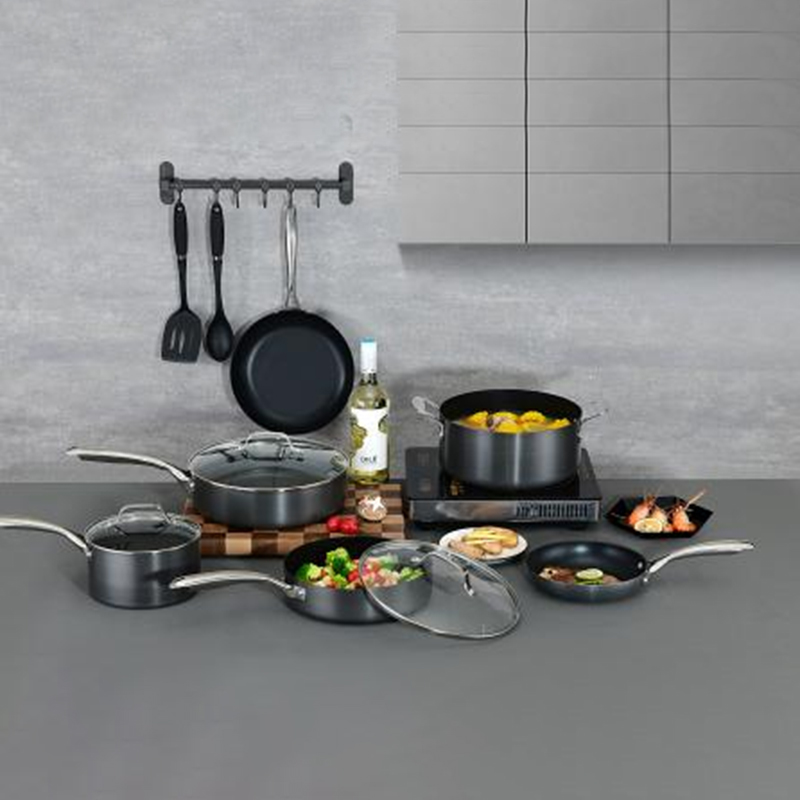
Silicone Offers More Than Surface Protection
Silicone has become particularly popular among non-scratch kitchen utensils because it combines flexibility with heat resistance. Some food-grade silicone utensils are rated around 400–600°F, depending on their formulation and construction. Certain products also use an internal nylon core covered by silicone to combine rigidity with a softer cooking surface.
Such construction can be useful for spatulas that need enough stiffness to slide underneath delicate food while keeping direct contact with a coated frying pan relatively gentle.
Useful Silicone Specifications
- Food-grade silicone construction
- Heat resistance around 400–600°F, depending on product design
- Flexible edges for scraping and turning
- Reinforced internal cores for added stiffness
- Dishwasher compatibility on suitable models
Does Nylon Have an Advantage?
Nylon utensils provide a different balance. Their greater rigidity can make them useful for lifting heavier food, stirring thick mixtures, or reaching underneath food with a relatively thin turner. However, temperature ratings vary by product, so nylon tools should not be left resting against a hot pan edge.
Heat can gradually deform a utensil edge. Once the edge becomes rough, uneven, or damaged, its surface may no longer behave like a smooth cookware-safe tool. This is particularly relevant to non-scratch kitchen utensils, because “non-scratch” performance depends on the actual condition of the utensil rather than its original material label.
Edge Design Can Be Just as Important
Material alone does not determine scratch resistance. A hard utensil with a smooth, rounded edge may behave differently from a softer utensil with a damaged or jagged edge.
- Rounded edges: Reduce concentrated contact pressure against the pan surface.
- Thin flexible tips: Help slide beneath eggs, pancakes, fish, and other delicate foods.
- Smooth surfaces: Reduce the chance of rough areas dragging across the coating.
- Reinforced handles: Provide control without requiring excessive pressure against the cookware.
Different Cookware Needs Different Tools
Not every pan has the same surface requirements. Ceramic non-stick cookware also commonly recommends silicone, wood, nylon, or plastic tools. Tramontina and All-Clad both provide similar guidance for ceramic surfaces.
Stainless steel cookware is different because many stainless cooking surfaces can tolerate metal utensils without the same coating concerns. All-Clad, for example, notes that metal tools are acceptable with its bonded stainless collections while recommending nylon, plastic, or wood for its non-stick cookware.
How Should Users Judge a Non-Scratch Utensil?
A useful evaluation should go beyond the “non-scratch” label. Buyers can examine the utensil's material, temperature rating, edge finish, flexibility, handle construction, and compatibility with the cookware surface.
- Check the heat rating: Make sure the specification matches the cooking temperature.
- Inspect the working edge: Avoid tools with cracks, rough sections, or melted areas.
- Match flexibility to the task: Flexible silicone suits scraping, while firmer nylon can provide better control during turning.
- Follow cookware guidance: Manufacturer instructions remain the reference for compatible utensils.
Protection Starts With the Complete Cooking System
Non-scratch kitchen utensils can help preserve modern cookware surfaces, but they are not a standalone solution. Material, edge geometry, heat resistance, and utensil condition all influence how the tool interacts with a pan.
Silicone, nylon, and wood provide practical options for many coated cookware surfaces, while metal tools are better suited to cookware specifically designed to tolerate them. Choosing the right combination allows the utensil to perform its job without unnecessarily stressing the cooking surface.
