

 English
 中文简体
 Español
 عربى
+86-13858925411 / +86-579-87721168
Modern stovetops have changed the way cookware interacts with heat. Gas flames, electric coils, glass-ceramic surfaces, and induction zones transfer energy through very different mechanisms. This difference becomes noticeable with aluminum cookware because the material is lightweight and highly conductive, yet pure aluminum does not respond directly to magnetic induction.
That combination explains why an aluminum pots and pans set can feel noticeably different after moving from a traditional gas range to a modern induction cooktop.
Aluminum Reacts Quickly to Direct Heat
Aluminum is widely used in cookware because it transfers heat efficiently. Frigidaire describes aluminum as a strong heat conductor for ceramic and glass cooktops, while also noting that cookware material affects how quickly and evenly heat moves from the cooking surface into the pan.
- Rapid heat response: Aluminum can respond quickly after the burner setting changes.
- Low overall weight: Large saucepans and frying pans remain easier to lift than many heavy metal alternatives.
- Broad heat distribution: A properly designed aluminum body can spread heat across a relatively wide cooking surface.
This behavior can feel particularly responsive on gas and electric cooking surfaces, where heat reaches the pan through direct contact or radiant energy.
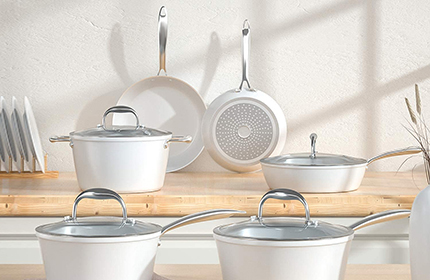
Induction Changes the Equation
Pure aluminum is not magnetic, so it cannot normally activate an induction cooking zone. Bosch and Whirlpool both explain that induction cookware needs a ferromagnetic layer to interact with the electromagnetic field generated beneath the cooktop.
That does not mean every aluminum pan is unsuitable for induction. Manufacturers can add a magnetic stainless-steel base to an aluminum body. Such construction combines aluminum's thermal characteristics with a magnetic layer that allows the pan to work on induction.
What to Check on an Aluminum Pan
- Magnetic base: Look for stainless steel or another ferromagnetic layer.
- Induction symbol: Check the manufacturer's compatibility markings.
- Flat bottom: A flat cooking base provides better contact with an induction surface.
- Base diameter: Match the cookware base to the heating zone for more consistent heat transfer.
Why the Base Matters More on Glass Cooktops
Glass and ceramic cooktops place greater emphasis on the contact between the pan and the cooking surface. Samsung recommends matching cookware size to the burner and advises users to lift cookware rather than slide it across glass surfaces.
Aluminum also deserves special attention on these surfaces because sliding an aluminum pan can leave metallic marks that resemble scratches. Frigidaire specifically highlights this issue with aluminum cookware used on ceramic-glass cooktops.
Flatness therefore becomes more than a design detail. It affects heat contact, stability, and interaction with the stovetop.
Thickness Changes the Cooking Feel
Not every aluminum cookware set uses the same gauge. Lightweight stamped aluminum can provide quick heat response, while heavier forged or cast aluminum designs can use thicker walls and bases for greater rigidity.
- Light-gauge construction: Lower weight and quick temperature response.
- Heavy-gauge aluminum: Greater structural rigidity and a more substantial feel.
- Multi-layer bases: Combine aluminum with steel or stainless steel to address specific heating requirements.
- Forged construction: Can provide a thicker, more rigid body without relying solely on added layers.
Current aluminum cookware products demonstrate how varied these constructions can be. Some sets use heavy-gauge aluminum around 4.0 mm, while induction-ready collections may combine aluminum with a steel base.
Different Pans Respond Differently
An aluminum pots and pans set usually contains several shapes, and each piece interacts with the stovetop differently.
- Frying pan: A broad base makes even heat distribution particularly noticeable during sautéing or searing.
- Saucepan: Taller walls concentrate heat around a smaller cooking area and suit liquids, sauces, and grains.
- Sauté pan: A wider base offers additional contact with the heating zone while retaining taller sidewalls.
- Stockpot: Large capacity makes base construction important because a cold load of food can significantly change pan temperature.
Does Induction-Ready Aluminum Feel the Same?
Not necessarily. Adding a magnetic steel layer changes the structure and weight distribution of the pan. The aluminum body still contributes rapid heat transfer, while the magnetic base enables induction operation.
Current cookware collections show this hybrid approach becoming common. SMEG, for example, uses cold-forged aluminum with a steel base across its cookware range and specifies compatibility with gas, induction, and ceramic cooktops.
Such construction allows manufacturers to create an aluminum pots and pans set that works across several modern cooking platforms rather than restricting the cookware to gas or conventional electric burners.
What Makes an Aluminum Set Versatile?
- Multiple cooktop compatibility: Useful for kitchens that may change from gas to induction.
- Stable flat bases: Help maintain reliable contact with smooth cooking surfaces.
- Appropriate thickness: Balances weight, rigidity, and thermal response.
- Magnetic base technology: Extends aluminum cookware into induction kitchens.
- Coating options: Non-stick or ceramic surfaces can add another layer of functionality to the aluminum body.
The Stovetop Changes the Cooking Experience
The difference users feel with aluminum cookware is not simply about the metal itself. Heat source, base design, thickness, pan diameter, and magnetic construction all contribute to the final cooking experience.
Gas and conventional electric surfaces can take advantage of aluminum's quick thermal response, while induction requires a magnetic base layer. This makes cooktop compatibility an important specification rather than a minor product detail.
For buyers comparing an aluminum pots and pans set, checking material construction alongside stovetop compatibility can reveal much more than the number of pieces included in the box. A well-engineered set can combine aluminum's lightweight structure and heat responsiveness with a base designed for the cooking technology used at home.
